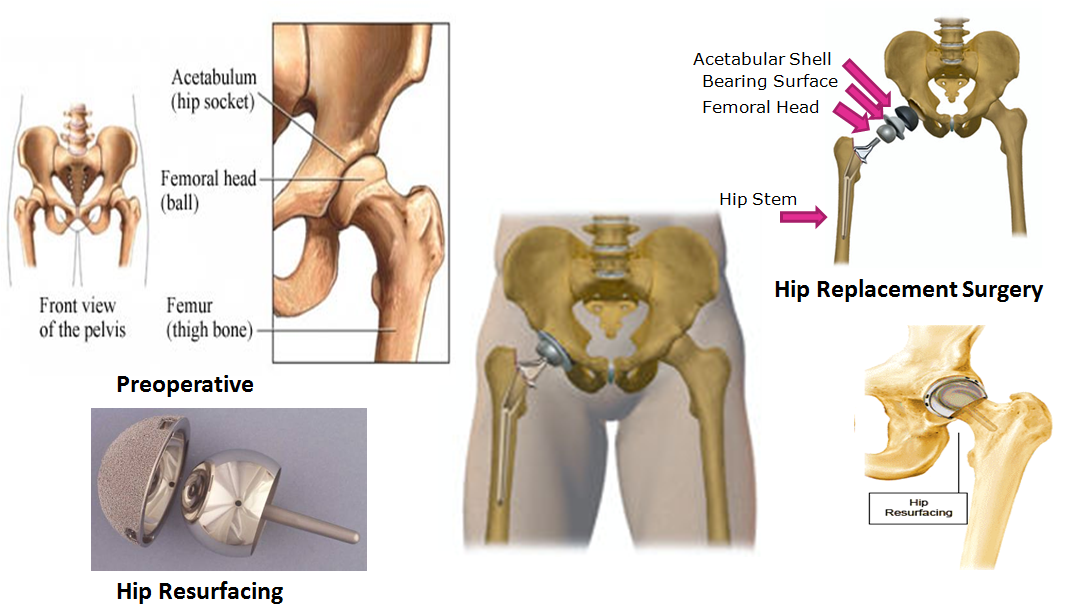

HIP JOINT:
Hip joint is a joint between pelvis and femur bone. Its primary function is to support the weight of the body in both static and dynamic postures.
In the human body hip joint is the primary connection between lower and upper limb. It is the connection between cup like pelvis and round headed neck of the femur bone. Both joint surfaces are covered by the lubricated layer called articular cartilage. It is a special type of ball and socket joint. Almost more than half of the femur bone grasped by the 2.5cm radius pelvis bone.
FEMUR BONE:
Femur bone is the one of the longest and strongest bone in the human body. It is around 48-50cm long and 2.5cm in diameter. It forms the part of hip joint.
Cortical/Compact Bone:
It is the outer shell of the bone. The main function is protect the organ, support the body weight, store and release chemical elements. This bone is very very strong, stiff and hard.
Cancellous/Spongy Bone:
It is soft, weaker and less stiff. It typically occurs inside the cortical bone. It consists of bone marrow, which helps to produce the blood cells. Spongy bone helps to provide strength to soft, solid organ.